
What is the difference between seal strength and seal integrity?
Understanding the seal strength and seal integrity is fundamental for ensuring package quality and safety. This knowledge helps you prevent product loss, maintain sterility, and meet regulatory requirements. By clearly defining these two properties, we aim to provide you with a solid foundation for your packaging validation processes. This clarity allows for more targeted testing and effective problem-solving when issues arise.
Seal Strength
Seal strength, often measured as seal peel strength, is a quantitative measure of the force required to separate the sealed layers of a package. It evaluates the material resistance of the seal itself, indicating how well the fused materials hold together under stress. This property is crucial for ensuring packages can withstand handling, transportation, and stacking forces without the seal peeling open. A package with high seal strength may still have microscopic channels that allow the passage of gases or contaminants, which is a separate concern. Testing for this typically involves using a tensile tester or a specialized leak tester that applies a controlled, peeling force to the seal area. The results are usually expressed in units of force per unit width, such as Newtons per 15mm, providing a clear, numerical value for quality control and comparison against specifications.
Seal Integrity
Seal integrity refers to the continuity and wholeness of a seal, acting as a barrier against the passage of gases, microbes, or other contaminants. It is an assessment of whether the seal is physically complete and free from leaks, channels, or weak spots. A package can possess high seal strength but poor integrity if there are pinholes or inconsistent fusion along the seal’s length. This characteristic is vital for products requiring sterility, modified atmospheres, or protection from moisture and oxygen. Methods to test integrity include bubble emission, dye penetration, and vacuum decay tests. We at Labthink provide instruments designed to detect these minute breaches that strength tests might miss. Maintaining seal integrity is essential for product shelf life, safety, and compliance with industry regulations, ensuring the package performs its primary protective function effectively.
Strength Versus
The core difference lies in what each property assesses: strength measures mechanical resistance to separation, while integrity test ensures there are no micro-leaks, pinholes, or gaps that would allow bacteria or air to compromise the sterile environment. Think of seal strength as the “brawn” of the seal—its ability to resist being pulled apart. In contrast, seal integrity is its “health”—an indication of being fully intact and continuous without any breaches. A robust, strong seal might still fail to protect its contents if integrity is compromised by an invisible micro-leak. Conversely, a seal with perfect integrity might be too weak to survive distribution. Therefore, both parameters are critical and often require separate, dedicated testing protocols for a comprehensive package evaluation. A complete quality control strategy must include assessments for both to guarantee that the package is both durable and hermetically secure throughout its lifecycle.
Conclusion
Seal strength is usually determined via a Peel Test (ASTM F88). A strip of the seal is pulled apart by a (tensile tester. Labthink C610H Auto Tensile Tester is professionally applicable to measurement of tensile, peeling, tearing, heat sealing, adhesive, puncture force, opening force, pulling force of various soft package materials. It conforms to international standards including ISO 37, ASTM F88, ASTM E4, ASTM D882, ASTM D1938, ASTM D3330, etc.
Seal Integrity is tested by specially designed leak testers. Labthink C660M Leak and Seal Strength Tester, a piece of seal testing equipment that functions as a leak tester and seal integrity tester. It performs evaluations including seal strength testing, burst-pressure leak testing, and compression resistance testing. The tester is applicable to the quantitative determination of seal strength and burst pressure for various flexible packages, aseptic packages, and plastic tamper-evident closures. It is designed to comply with test standards such as ISO 11607-1, ISO 11607-2, ASTM F1140, and ASTM F2054.
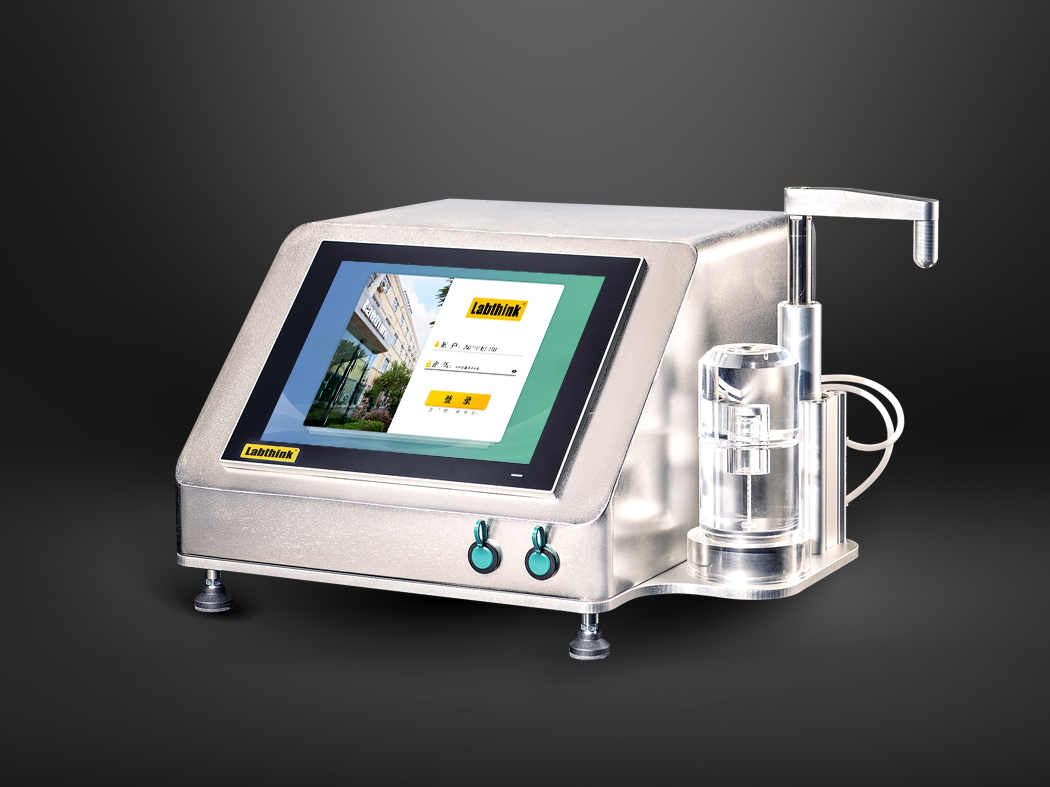
Labthink C690M Nondestructive Package Leakage Detector is based on the vacuum decay method and pressure decay method, and is designed and manufactured according to ASTM F2338 and other standards. It is professionally suitable for the trace leakage detection of various drug packaging such as vials, ampoule bottles, cartridge bottles, infusion bottle, and prefilled syringes and so on.