
What are the different types of seal integrity test methods used in the packaging industry?
Ensuring package seal integrity is critical for product safety and shelf life. We understand that selecting the right test method is essential for your quality control process. This overview covers several common techniques used to identify leaks and weak seals. Our goal is to provide clear information to help you make informed decisions for your packaging line.
Bubble Emission Leak Tests
Bubble emission leak testing is a straightforward, qualitative method used to identify the location of a leak. The package is submerged in a water tank and internally pressurized with air. An inspector then visually observes the package for a steady stream of rising bubbles, which indicates a leak path. This method is effective for detecting larger leaks and is relatively low-cost, but it is operator-dependent and may not be sensitive enough for very small, micron-sized leaks. It is a common manual procedure for finished goods and is often used as a go/no-go test. For more precise and automated quantitative measurements, a dedicated seal tester is typically employed in a laboratory or production environment to provide more reliable and repeatable data.
Vacuum Decay Leak Detection
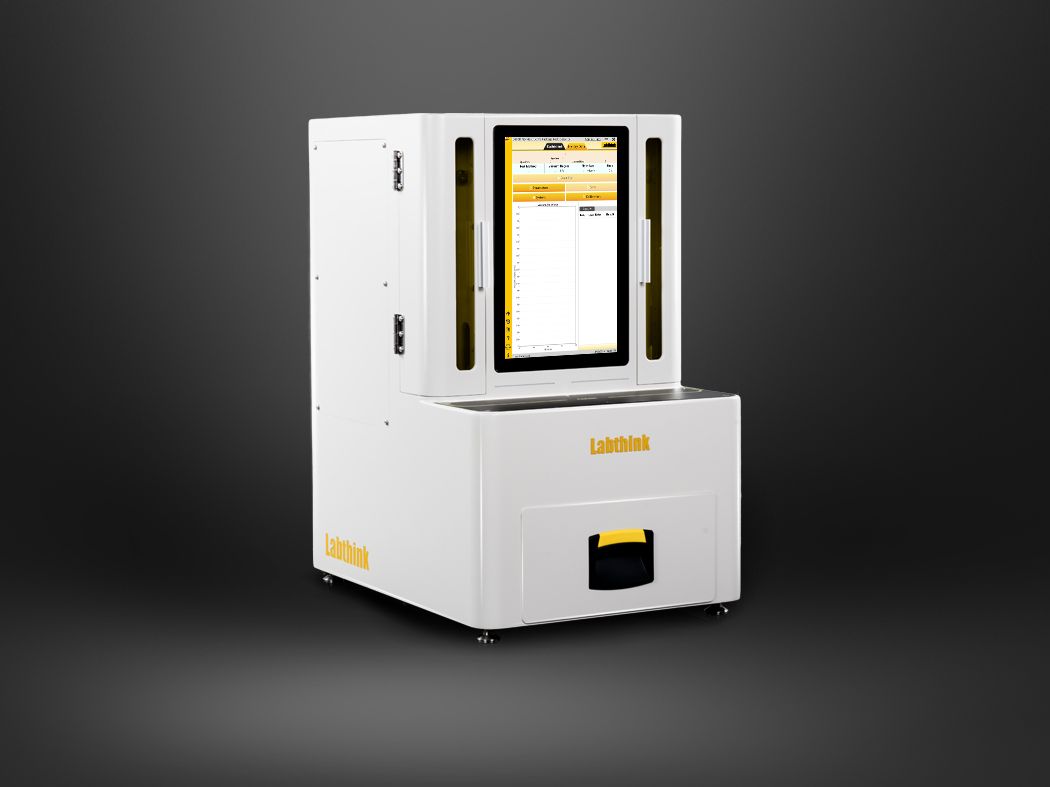
Vacuum decay leak detection is a non-destructive, quantitative test method ideal for rigid and semi-rigid packages. The package is placed in a sealed test chamber, which is then evacuated to a predetermined vacuum level. The system monitors the vacuum level for a specific duration; a rise in pressure inside the chamber indicates that air has leaked out of the package. This method is highly sensitive and can detect very small leaks. It provides objective pass/fail results and is well-suited for automated production line integration. We at Labthink develop instruments based on this principle, which is widely used for testing vials, ampoules and other sealed containers in the pharmaceutical and food industries to ensure product integrity and compliance with regulatory standards.
Dye Penetration Leak Test
Dye penetration testing is a destructive method used specifically to locate leaks in the seal area of porous and non-porous medical packaging, such as Tyvek pouches. A liquid dye is introduced to the seal area, the leak can be observed by the operator. While highly effective for pinpointing seal defects, this method destroys the test sample and requires manual inspection. It is a recognized standard for validating the sterility barrier of medical device packaging, ensuring that no contaminants can enter through faulty seals during storage and handling.
Conclusion
Labthink C660M Leak and Seal Strength Tester, a piece of seal testing equipment that functions as a leak tester and seal integrity tester. It performs evaluations including seal strength testing, burst-pressure leak testing, and compression resistance testing. The tester is applicable to flexible packages, aseptic packages, plastic tamper-evident closures, and flexible tubes. It is designed to comply with test standards such as ISO 11607-1, ISO 11607-2, ASTM F1140, and ASTM F2054.
Labthink C690M Nondestructive Package Leakage Detector is based on the vacuum decay method and pressure decay method, and is designed and manufactured according to ASTM F2338 and other standards. It is professionally suitable for the trace leakage detection of various drug packaging such as vials, ampoule bottles, cartridge bottles, infusion bottle, and prefilled syringes and so on.